
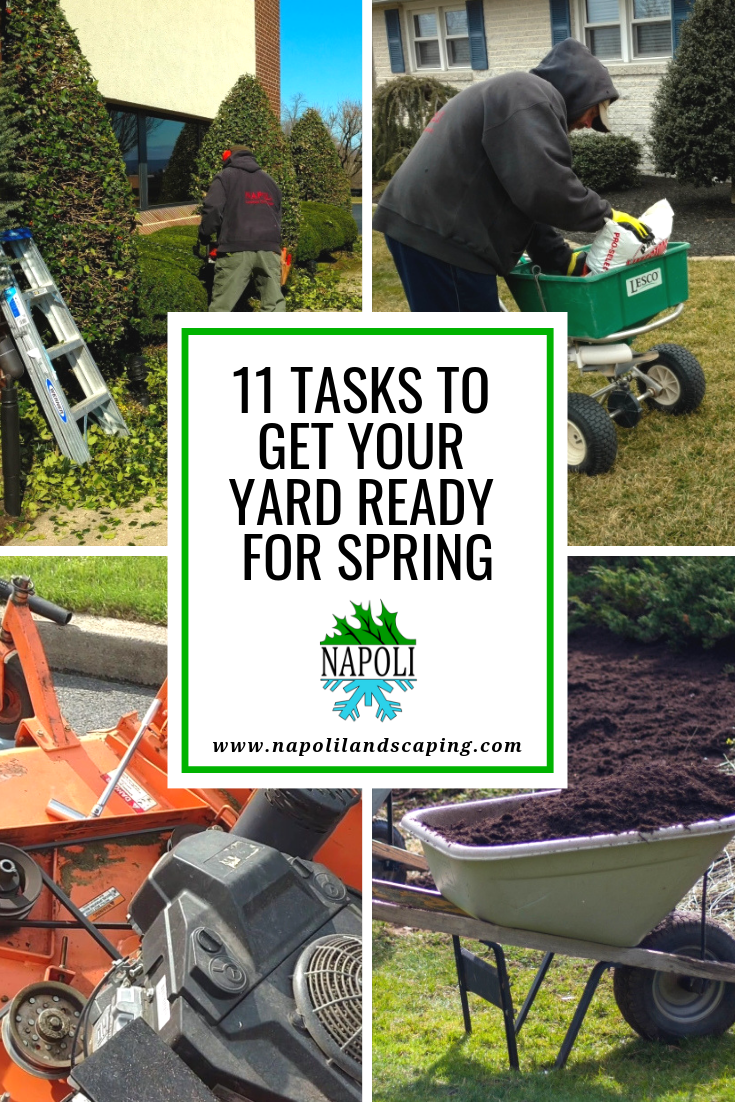


Spring preparations are really important for how awesome your yard will look throughout the year. They also contribute to the amount of effort needed to keep it looking that way. We’ve compiled our list of things to get your yard ready for spring so there is no guesswork on your part.
Check Over Tools And Lawn Equipment
You don’t want to find out that your mower won’t start the first time you go to cut the grass. Be sure to check over equipment early enough so that you can fix problems that are found.
There are a few things you can do to make sure your equipment is ready to go. Sharpen blades, grease fittings, replace old fuel with new fuel, change spark plugs, perform oil changes, clean or replace air filters.
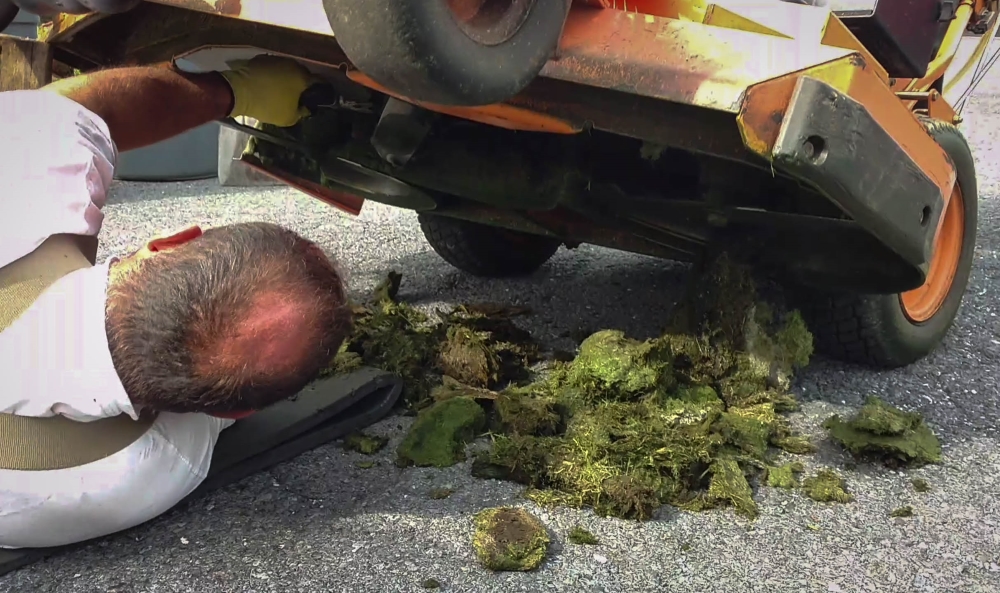
Mowers will also need to have the underside of their blade deck cleaned if this wasn’t done before storage. You mower will probably be the primary concern, but don’t forget about weed eaters, backpack blowers, and hand tools too.
Spring Cleanup
Spring cleanings aren’t just for inside the house. During the winter, twigs, branches and more leaves blow into your yard — usually from lazy neighbors. However, oak trees are notorious for holding onto their leaves late into winter.
Removing lawn debris makes it easier to mow and allows fertilizer and pre-emergent treatments to penetrate better. Sticks in your beds also makes it harder to spread mulch.
Assess The Lawn
You’ll most likely be raking during a spring cleanup. Raking pulls up any thatch that has accumulated over the winter, breaks up matted sections, and also allows you to assess the condition of your grass.
Look for matted patches, compacted soil, bare spots, wet spots and areas of erosion. Matted and wet areas are subject to diseases and molds. New grass won’t be able to grow through matted grass and will die from a lack of sun.
If you notice areas of soil compaction, you should plan to do aeration and reseeding in the fall. Wet areas and erosion can be a sign of too much irrigation, land contour issues, or a drainage problem. Each problem will need to be tackled differently.
Prune Plants And Trim Trees
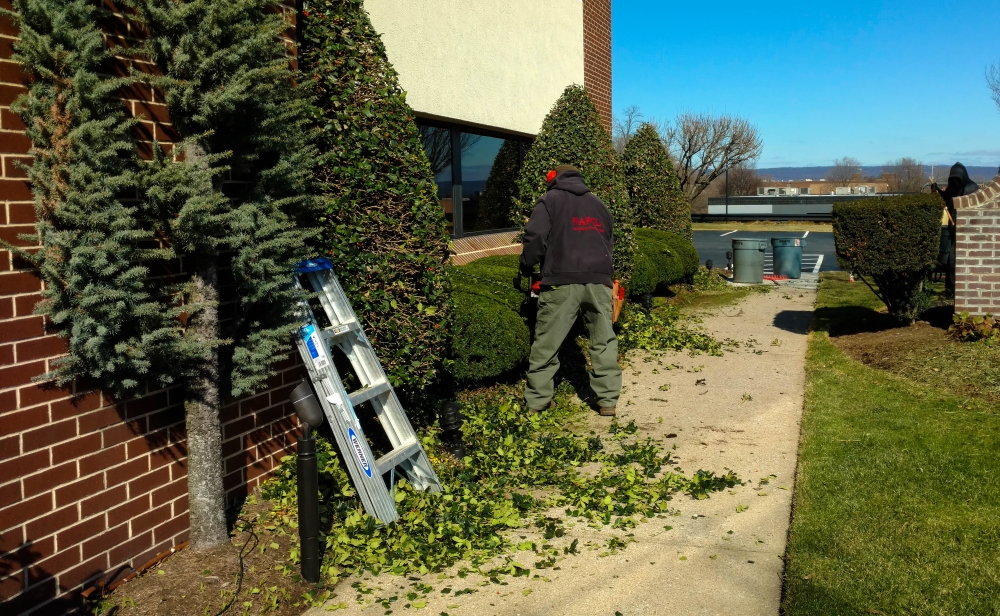
Prune your plants that should be trimmed back in the spring. This varies by plant so be sure to keep records of what plants you have and develop an optimal maintenance schedule.
Tree trimming is an essential part of keeping trees healthy. If you keep on top of removing dead limbs, you’ll prevent damage to your home and plant life during wind storms.
It’s easier to see the condition of tree branches when the leaves are off and being up in the tree ensures proper evaluation. If you have larger trees and this isn’t something you want to deal with, hire someone to do a safety trimming every three years to keep on top of it for you.
Test Soil pH
Ideally, you’ll want to test your soil pH in the fall for the most accurate reading, but testing in early spring will also provide useful information. Most plants thrive at pH’s between 6 and 7.5.
Areas with lots of organic matter, harsh winters, lots of rain (or too much irrigation), and using lots of high-nitrogen fertilizers will cause your soil to turn acidic. The presence of moss is also a sign of acidic soil.
You can pick up a soil testing kit at most garden centers. If you then determine your pH is too low, lime applications will help neutralize the soil’s pH.
Apply Fertilizer, Pre-emergent, and Weed Killer
If your lawn is too acidic, apply an early spring lime application to help neutralize the pH. This will help your plants absorb nutrients of future fertilizer applications. It takes this a while to absorb into the soil, so do this well in advance of a fertilizer treatment.
The most important treatment is a pre-emergent herbicide. This needs to be put down before crabgrass germinates. You want to shoot for when forsythia blooms are about spent. Do not delay. If you miss the window, you will be fighting crabgrass all year until fall frosts kill it off.
About 6-8 weeks later put down anther pre-emergent and a weed and feed fertilization. Be sure to select a weed and feed that also targets broadleaf weeds. You can minimize applications if you get products with dual functions.

Soil Drench Trees And Shrubs
Most trees and shrubs incur leaf damage by spider mites, aphids, scale, and other various inspects. This leaves plants in your garden looking shabby during what should be a beautiful flush of peak blooms.
We do an early insect pre-treatment on lots of trees and shrubs by soil drenching. This way the insect repellent soaks in through the plant’s root system instead of spraying it on the foliage.
Repair Lawn Damage
Major damages from snow plowing or when large limbs fall off trees should be repaired. This does not include small brown patches in the lawn. Those will normally fill back in if you have a healthy lawn or will be taken care of during a fall aeration and reseeding.
Unfortunately, grass seed will not germinate for 8-12 weeks if you put down a pre-emergent. You’ll have to take extra care to cover or block areas of repair when you apply your pre-emergent. The perimeters of these sections will still not fully germinate due to pre-emergent leeching nearby and will invite summer weeds.
If you don’t want to deal with that, you can lay sod instead. Either way, new grass is less tolerant to high summer heat and will need to be watered more which is why it is recommended to make new lawns in the fall. However if you wait, bald sections are much more prone to weeds. You’ll have to decide which is the better option.
Prepare And Plant Flower Beds
Edging flower beds is important because it makes them look better, prevents grass from creeping into gardens, and helps retain water. The best time to edge your beds is in the spring when soil is softer.
If you don’t plan to plant any annuals you can apply slow release fertilizer to existing plants to give them a good start for the season. Annuals are worth the effort because you get can enjoy months of colored blooms that outlast the shorter flushes of perennials.
Apply Mulch
If you can afford mulching every year and have the energy, do it. Good mulch that is rich with organic matter does so much for flower beds. It replaces nutrients, retains moisture, prevents erosion, controls weeds, and enhances visual appearance.
The dark brown or black dyed mulch contrasts vibrant green foliage and colored blooms making them really pop. If you want something cheap and you start your own compost pile. Grass clippings aren’t as “pretty” but really work well for weed control and nutrients.

Mow Early And More Often
When grass comes out of its dormant winter phase it grows vigorously. Don’t wait too long before the first cutting. Cutting grass back too far when it’s high can stunt its growth. Rule of thumb is to only remove one third of its height each mowing.
It’s better to mow every 5-6 days instead only once a week. Your grass will be fuller and healthier if you mow more frequently during the first 6 weeks of spring.
For most grass types, keep the blade height at 3-4 inches. Taller grass is able to sink deeper healthier roots. The more healthy your lawn is the less weeds can infiltrate. Some grasses need to be a little shorter to look their best. Try a few height settings to see what works best if you are unsure.
There is a lot of work that goes into spring yard preparations. Don’t let it overwhelm you. Focus on important aspects like pre-emergents and equipment maintenance. You can pick at other parts that are a little less time sensitive.
A great way to accomplish the tasks for getting your yard ready for spring is to get your whole family involved. Sharing the
How to you break up your yard’s workload in the spring?


BocaHickory.Com
11 Apr 2019What’s Happening i am new to this, I stumbled
upon this I’ve found It absolutely helpful and it has aided me out loads.
I’m hoping to give a contribution & aid different
customers like its helped me. Great job. https://Bocahickory.com/
Napoli Landscaping
13 Apr 2019We are really glad our article has helped you. Thank you for letting us know!