Many people experience prolific blooming with their forsythia year after year and then all of a sudden they don’t do well. This may leave you confused because you didn’t do anything different than previous years. Things change slowly or the problem may not be apparent. We’ve provided the most common reasons why a forsythia isn’t blooming.
Too Cold Or Late Frost
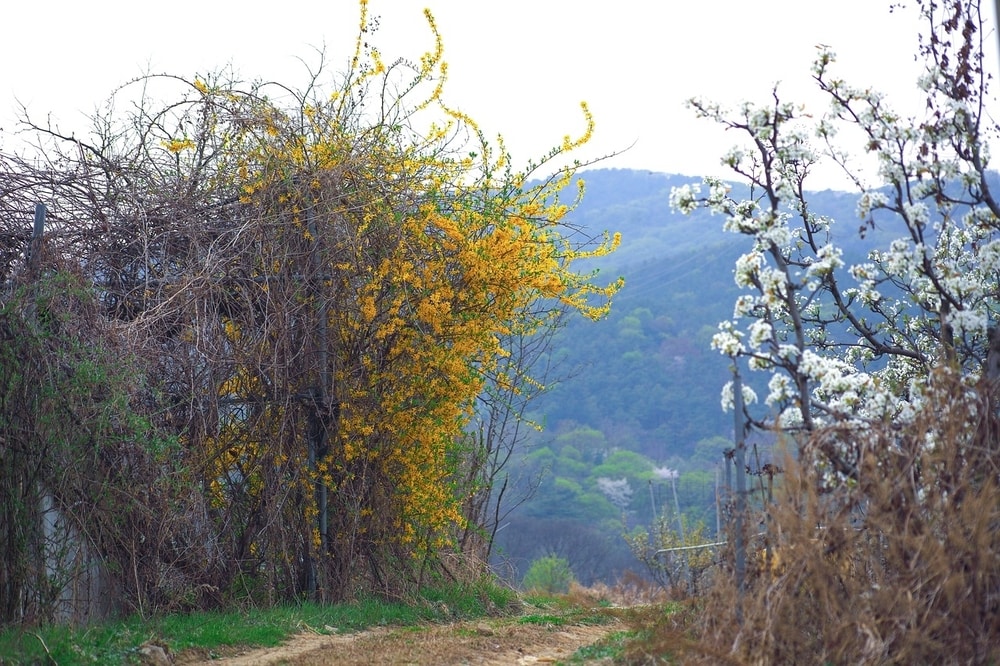
Forsythia flowers form on old wood, not the new shoots. That means that their buds have to be hardy enough to withstand winter temperatures in your area. If they can’t, they will die and you won’t have any blooms come spring.
This is mostly and issue in colder climates. Each cultivar of forsythia is hardy to a certain temperature range, so if you are planting a new bush, verify its hardiness zone. Most people aren’t sure what cultivar they have if they didn’t plant it. Older varieties are much more susceptible to colder temperatures. This may be your problem if you have ruled out other issues.
Be aware that the listed hardiness rating of this plant is usually for the bush in general. You’ll need to find one that is bud hardy to you zone. If it doesn’t specifically say, choose a cultivar that is hard to a zone colder than yours to ensure that the flower buds will survive through the winter.
Improper Pruning
Those cheerful yellow blooms develop only on the older branches. New growth will not produce any buds. If you prune too much too late in the year, you are actually removing a lot of next year’s blooms.
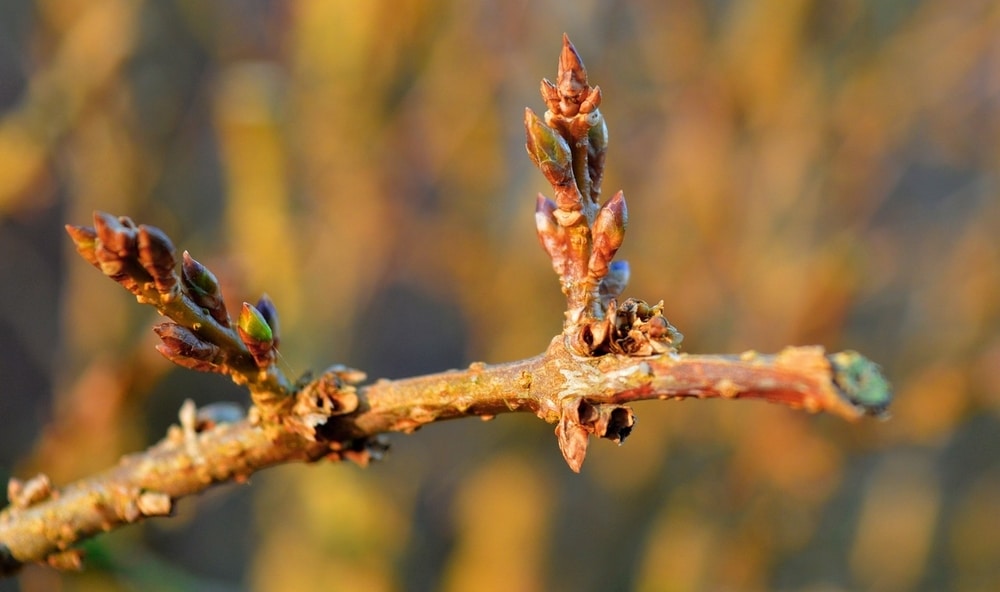
Buds begin to develop shortly after these shrubs are done flowering in the spring and continue through fall that same year. They do not have a tidy winter appearance which may prompt you to try to clean them up at this time. Just don’t do it.
However, if you insist on doing a harsh pruning every year, do it within a couple weeks of the end of their spring blooms. This will give you more blooms that you have been seeing from your pruning techniques.
It is worth mentioning that this is not the right shrub for you if you want a well-manicured bush. Forsythia need to allowed to be more naturally shaped to look their best.
Not Enough Sunlight
You probably know that forsythia need full sun for a spectacular show of spring flowers. Either you misjudged the amount of sun that location gets or factors have changed. If your shrubs look spindly, it might be time to reassess your sun situation.
As time goes on, plants grow and mature in your yard and those of your neighbors. People put on additions to their homes. It’s very possible that a mature tree or garage now shades your forsythia during a large portion of the day.
Small trees can grow faster than you realize and block valuable sunlight that your sun-loving plant was originally getting. Remember that full sun means at least 6 hours of sunlight each day.
It might be time to elevate your trees or possibly move your forsythia bush to better suited location.
Neglect
Never pruning your forsythia can make just as much of an impact on its flowers as pruning too much. Each forsythia cultivar has a finite size that it gets to. When it reaches this point, it’s growth slows and each year you get less and less blooms.
If you have very large variety, but you never remove any dead branches you may be shading out the center of your plant. This will be evident by having no blooms in the middle and some blooms towards the ends of the branches.
The solution for both cases is to overhaul your bush. In order to rejuvenate old growth, you can either cut the entire bush back to about 4 inches from the ground or only cut some of the canes back.
Cutting the whole bush back is more drastic but it does result in lush new growth and branches that flower again. Another approach would be to remove 1/3 to 1/2 of the branches to the ground. Then the following year, do the same thing. This will completely revitalize your forsythia over 2 to 3 years.
Nutrient Imbalances
If you have ruled out all of the above causes there may be an issue with nutrients. Too much nitrogen will prevent a forsythia from blooming. The first thing you should assess is what plants are around your bushes and have you changed any fertilizing applications nearby.
If you have grass up to the edge of your bushes and apply regular fertilizer treatments to your lawn, it is very likely that nitrogen is your problem. Lawn fertilizer is nitrogen heavy and the granular pellets laid down by broadcasters fling out about 4 feet on all sides.
You can combat this by adding a high phosphorus treatment in spring to your forsythia and/or increasing the side of the flower bed in between the lawn. It can’t hurt to perform a soil test to confirm there’s an issue to exhaust all causes of the lack of blooms.
If none of these causes ring true, it may be time to remove and replace your forsythia with a new one. There are many cultivars out now that fit a wider breadth of situations. You might even like your new bush better than your old one.
We hope that this guide helped solve the blooming issues with your forsythia.
What issues have you found with your forsythia blooming and what did you do to fix them?